
Material
Porcelain
Engineered density, virtually any pattern, indoors or out.
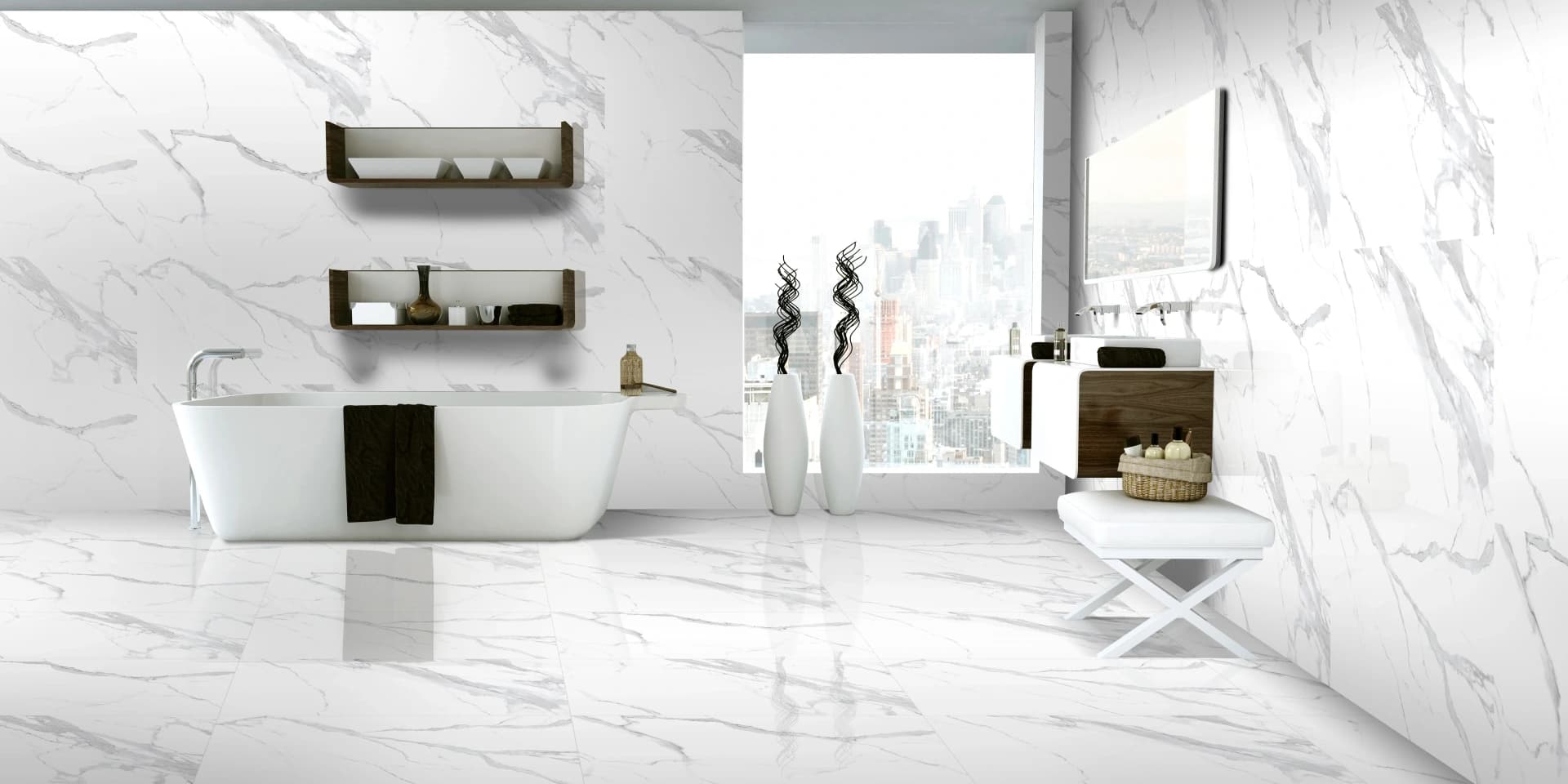
Porcelain is fired at higher temperatures than ceramic, giving it less than 0.5% water absorption and PEI ratings high enough for commercial floors. The result is a surface that can convincingly stand in for marble, concrete, terracotta, or weathered wood without the maintenance, and at scale, in slabs up to 3.2 × 1.6 m.
Best for
When porcelain earns its place.
- 01
High-traffic kitchen and entry floors
- 02
Wet areas: showers, pool surrounds, outdoor patios
- 03
Large-format walls where grout lines should disappear
- 04
Designs that want a stone or wood look at a more practical cost
See these in person: visit our Lomita showroom · Open Mon–Sat
Take-Home SamplesFrom the catalog
Porcelain pieces, by appointment.
We carry curated porcelainpieces that aren’t all online yet. Visit our Lomita studio or reach out and we’ll prepare a selection for your project.
Common questions
Working with porcelain.
- Is porcelain better than ceramic?
- Porcelain is denser, less porous, and rated for heavier wear. For floors, wet areas, and outdoor use it almost always outperforms ceramic. For walls and decorative accents either works.
- Can porcelain be used outdoors in California?
- Yes. Exterior-rated porcelain (typically 20mm slabs) is engineered for UV, freeze-thaw cycles, and chlorinated water. Ideal for South Bay LA patios and pool decks.
- How thick are large-format porcelain slabs?
- Standard interior slabs are 6mm or 12mm. For floors, fireplaces, and outdoor use, 20mm slabs add structural strength and slip resistance.
Compare materials
Other materials in our catalog
Ceramic
Handmade-feel surfaces with depth, craft, and color.
Marble
Quarried stone, polished or honed, no two pieces alike.
Natural Stone
Limestone, travertine, quartzite: earth's own materials.
Zellige
Hand-pressed Moroccan terracotta with glaze that pools and pools.
Terracotta
Sun-baked clay, warm underfoot, ages like nothing else.
Glass Mosaic
Light-catching small format, slip-resistant in the wet.
Metal
Brushed brass, oxidized copper, blackened steel: accents only.